
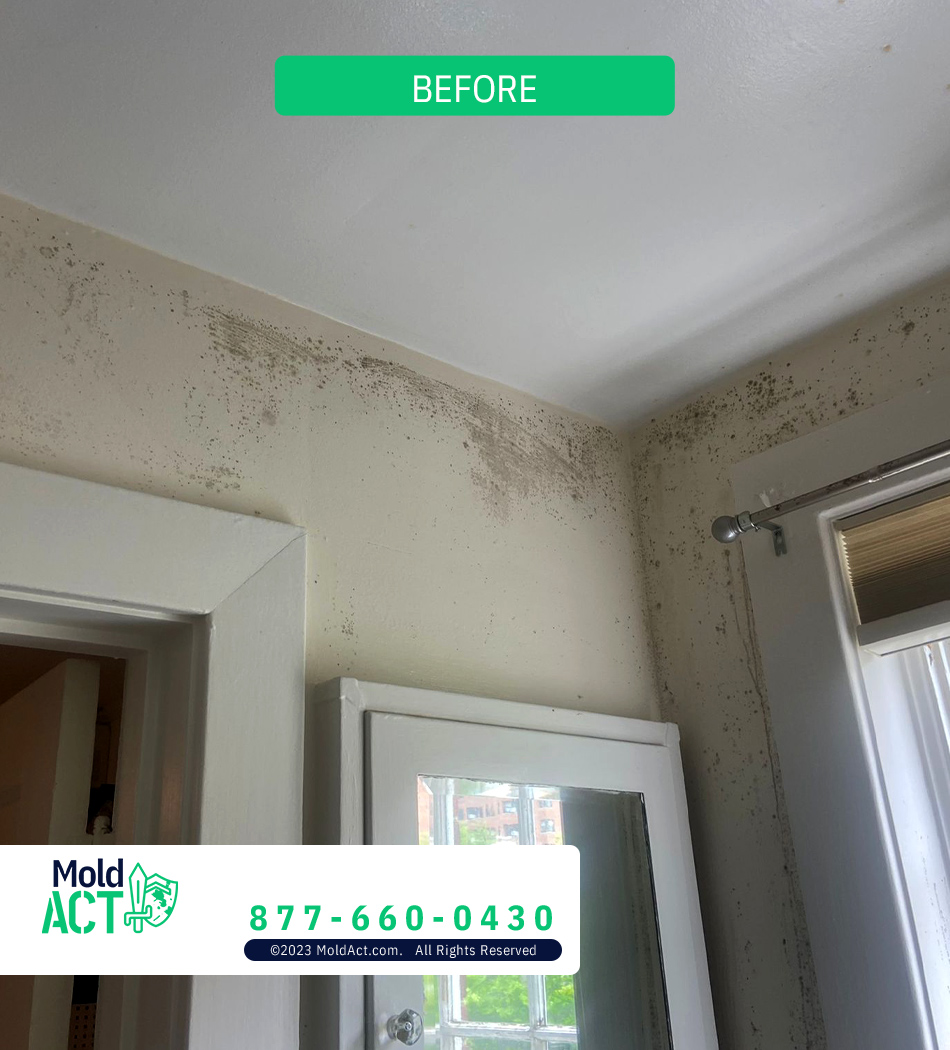
Before — illustrative
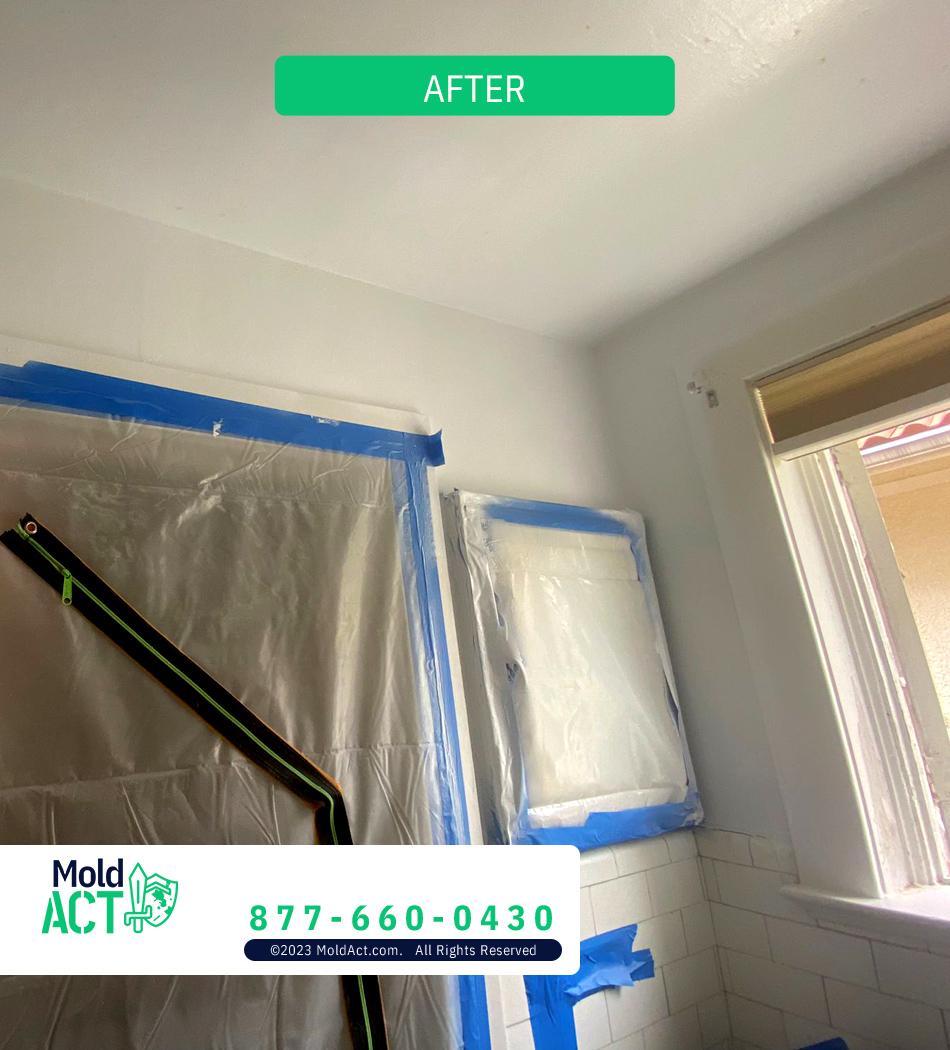
After — illustrative
The kind of Arlington home in this story is a unit in one of the Rosslyn-Ballston corridor’s newer high-rise condo buildings — dense, mid-2000s-and-later construction where a large share of units share centralised or semi-centralised HVAC infrastructure between neighbours.
(This story is illustrative of a typical job in this market — not a specific customer’s home — unless a caption on this page says otherwise. We build stories like this from real patterns in the housing stock we work in, because the situation is genuinely common, but we won’t invent a named customer or an address to make it feel more real than it is.)
The worry
A musty smell shows up along one wall or in a closet, with no obvious source inside the unit itself — no visible leak, no recent water event, nothing under the sink. The homeowner or renter checks everything they can think of and finds nothing, while the smell keeps coming back. In a high-rise, that’s often the first sign the actual source isn’t inside the unit at all.
Why a shared-wall building concentrates risk differently than a house does
High-rise condo construction routes HVAC condensate lines and drain pans through shared shafts and ceiling cavities that touch multiple units. A single coil or drain-pan failure one floor up, or in the unit next door, can send moisture into a shared wall or ceiling cavity and show up as a smell or a stain somewhere that has nothing to do with that unit’s own HVAC system. It’s not a fault of the affected homeowner’s own equipment or upkeep — it’s simply how shared mechanical infrastructure behaves when something fails elsewhere in the building.
What an honest inspection actually looks for
- Moisture readings along shared walls and ceiling cavities, not just the affected unit’s own HVAC unit and ductwork
- Whether the pattern of growth suggests a source above, below, or beside the unit — which determines whether building management needs to be involved at all
- Documentation suitable for bringing to a condo association or building manager — a musty smell alone rarely gets action, but a written independent assessment usually does
- Confirmation of which state’s law actually applies, since Arlington sits just across the Potomac from DC but is governed entirely differently
Why Virginia law is the relevant framework here, not DC’s
It’s an easy assumption to make, given the two-minute drive from downtown DC — but Arlington is Virginia, and Virginia’s mold provisions run through the Virginia Residential Landlord and Tenant Act. A landlord who receives actual notice of mold must remediate to EPA/HUD professional standards using ordinary care, and a tenant has statutory relocation rights if remediation requires it. There’s no dedicated Virginia state mold license the way DC, Florida, and New York have — but since a 2024 update, remediators are required to hold IICRC certification, which is exactly the credential worth checking before hiring anyone for a job like this.
The fix
- Source tracing — identifying whether the leak is inside the unit’s own system or a shared building component, which changes who’s actually responsible for the underlying repair.
- Containment — sealing off the affected area during work, particularly important in a shared-wall building where airflow between units is a real consideration.
- Removal of contaminated materials — drywall, insulation, or ceiling material that absorbed moisture and can’t be safely dried and kept.
- Antimicrobial treatment and HEPA cleaning of the affected area.
- A documented report for the condo association or building manager, laying out the source and scope clearly enough to support a repair request or claim against the building’s own maintenance obligations.
The independent clearance test
Once remediation is complete, an assessor independent of the remediation crew verifies spore counts and confirms no remaining visible growth — the same standard applied everywhere else, with the added value here of a written record that stands on its own if the building’s shared-system repair becomes a longer conversation with management.
What we’d tell an Arlington homeowner in this exact situation
If you’re smelling something with no obvious source in your own unit, don’t assume it’s nothing just because you can’t find it — in a high-rise, that’s often exactly the sign the real source is a shared wall or ceiling cavity, not your own equipment. Get an independent assessment before you go to your building’s management, so you’re bringing them a documented finding instead of just a complaint they can wave off.