
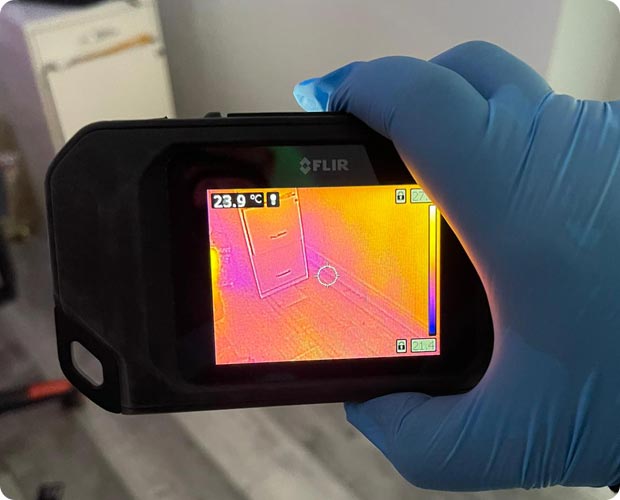
A mold inspection is the essential first step before any remediation work. A licensed mold assessor conducts a systematic visual survey of the property, uses moisture meters and thermal imaging to locate hidden wet areas, and collects air or surface samples where mold is suspected or confirmed. Samples are sent to an accredited AIHA laboratory for species identification and spore-count analysis.
Under the NYS 2015 Mold Law and analogous Florida and New Jersey regulations, the mold assessor and the mold remediator must be separate companies. This independence protects homeowners from inflated scopes and conflicts of interest. MoldAct works exclusively with licensed, independent assessors in each market.
After the inspection you receive a written Mold Remediation Protocol — a formal document that specifies the scope of work, containment requirements, clearance criteria, and post-remediation verification procedures. Any contractor performing the remediation is legally required to follow this protocol.
Señales de que necesita inspección de moho
- Visible dark or discoloured patches on walls, ceilings, or floors
- Persistent musty or earthy odour in one or more rooms
- Unexplained respiratory symptoms or allergic reactions indoors
- Water stains, efflorescence, or swollen drywall
- Recent water intrusion — roof leak, burst pipe, or flooding
- Condensation on windows or cold surfaces in humid conditions
- Peeling paint or wallpaper that is not explained by age
Por qué Miami lo sufre
Baltimore's pre-war rowhouse stock has plaster walls and aged plumbing that conceal moisture intrusion for years before visible mold appears — thorough moisture mapping is essential.
In New Jersey, post-Hurricane Sandy properties (particularly in Essex, Hudson, and Union counties) have a higher incidence of latent mold in basement and crawl-space framing that was not properly dried after the 2012 flooding.
Miami's year-round humidity (70–90%) means that any water intrusion — roof leak, HVAC condensation overflow, or plumbing drip — can produce visible mold within 48–72 hours. Inspections should include the HVAC air handler coil and drain pan as standard.