
Saltar al contenido
Remediación de moho licenciada — llame para agendar
EN
MoldAct logo MoldAct Remediación de Moho Certificada IICRC S520
Technician in full protective suit and respirator removing mold-damaged material during a remediation job

Remediación de Moho en Foggy Bottom

La remediación de moho certificada IICRC S520 incluye contención, eliminación física de materiales porosos, vacío HEPA y prueba de autorización por una empresa independiente — nunca la misma empresa que realizó la remediación.

Obtenga su Inspección de Moho Gratis

O llame ahora: (877) 660-0430

Remediación de moho en Foggy Bottom: lo que debe saber

Foggy Bottom debe su nombre al terreno bajo y antiguamente pantanoso a lo largo del Potomac que históricamente atrapaba niebla y humo industrial — ese mismo terreno bajo y húmedo significa que el agua subterránea y la humedad de los cimientos siempre han sido un factor más persistente aquí que en los vecindarios de mayor elevación de DC.

Si su casa adosada está junto a una de las grandes instituciones aquí — GWU, el Departamento de Estado, el Banco Mundial — sus grandes sistemas de aire acondicionado centralizados pueden desarrollar fallas de condensación que se extienden a su pared medianera adyacente.

Condiciones de moho en Foggy Bottom

Tipos de moho comunes en esta zona: Cladosporium (low-lying, historically marshy ground and its effect on foundation moisture); Penicillium/Aspergillus (institutional HVAC systems adjacent to residential party walls); Stachybotrys chartarum (student-rental units with delayed leak reporting); Chaetomium (older rowhouse basements with chronic groundwater proximity).

Señales de que necesita remediación de moho

  • Visible mold growth larger than 10 square feet (Level II or III scope)
  • Mold in HVAC systems, ductwork, or air handlers
  • Mold on structural framing (joists, studs, subfloor) in basement or crawl space
  • Black mold (Stachybotrys) confirmed by laboratory testing
  • Mold behind walls or under flooring discovered during renovation
  • Recurring surface mold that returns within weeks of cleaning
  • Musty odour that persists after visible mold is cleaned
Simple, transparent process

Nuestro Proceso de Remediación de Moho en Foggy Bottom

  1. 1

    Moisture source correction

    Before any removal work begins, the source of water or elevated humidity driving the mold growth must be identified and corrected. This may involve plumbing repair, roof repair, grading, or HVAC service — performed by the appropriate licensed trade.

  2. 2

    Containment setup

    The work area is sealed from the rest of the building using 6-mil poly sheeting and zipper doors. A HEPA-filtered negative air machine creates negative pressure inside the containment, drawing air out through the HEPA filter and preventing mold spores from escaping into clean areas.

  3. 3

    HEPA vacuuming

    All surfaces within the containment area are HEPA-vacuumed prior to any demolition to reduce the airborne spore load. Workers wear full PPE including P100 respirators and Tyvek suits.

  4. 4

    Material removal

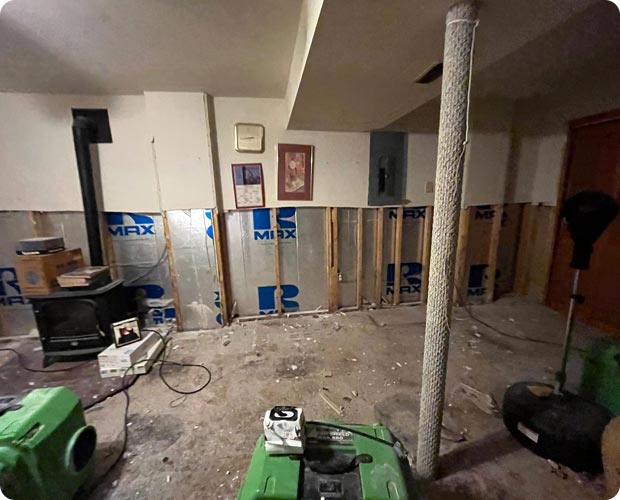
    Porous materials (drywall, insulation, carpet, wood in advanced Condition 3) are removed and double-bagged in 6-mil poly bags, sealed inside the containment, and disposed of as mold-contaminated waste. Non-porous structural surfaces (concrete, metal) are HEPA-vacuumed and wire-brushed.

  5. 5

    Antifungal treatment

    Structural wood surfaces (studs, joists, subfloor) are treated with an EPA-registered antifungal agent. Some protocols specify sanding or media blasting for heavily contaminated wood. No encapsulant paint is applied over active mold growth.

  6. 6

    Independent clearance testing

    Once remediation is complete and the containment is still in place, the original licensed assessor (or another independent assessor) collects clearance air samples. Results must meet the protocol's clearance criteria before containment is removed and reconstruction can begin.

Remediación de Moho en Foggy Bottom — Preguntas Frecuentes

¿Proporcionan remediación de moho en Foggy Bottom?

Sí — MoldAct proporciona remediación de moho en Foggy Bottom (códigos postales: 20037). Llámenos para programar la cita disponible más cercana.

How long does mold remediation take?

A typical residential remediation takes 1–5 days depending on scope. Small bathroom remediations (Condition 2, under 10 sq ft) may take less than a day. Large basement or crawl-space remediations with structural framing involvement typically take 3–5 days plus drying time.

Do I need to leave my home during remediation?

For containment Level II and III remediations, we recommend residents and pets leave the work area. Whether you need to vacate the entire property depends on the size and location of the containment and will be specified in the written protocol.

Will mold come back after remediation?

Mold will not return if the moisture source is corrected and the remediation is performed to the IICRC S520 standard. If mold recurs, it means either the moisture source was not fully resolved or the initial remediation was incomplete — the clearance test is the verification that it was done correctly.

Does insurance cover mold remediation?

Coverage depends on the cause. Sudden water damage (burst pipe, appliance failure) is typically covered. Gradual moisture intrusion, flooding, or maintenance neglect is usually excluded. We provide detailed documentation to support your insurance claim.

Remediación de Moho en Foggy Bottom — reserve hoy

Contratistas de remediación de moho certificados IICRC. Llame para agendar.

Llamar Cotización