
Moho en rastreo en South Beach: lo que debe saber
South Beach's Art Deco buildings (1930s–1940s) were built to pre-air-conditioning standards with large windows and cross-ventilation design — modern HVAC retrofits in these buildings often introduce condensate overflow issues in wall cavities not designed for mechanical cooling.
The constant salt air from the Atlantic Ocean and Biscayne Bay accelerates building envelope degradation — window seal failures and exterior wall cracks admit moisture rapidly, creating mold in exterior-facing wall assemblies.
SoBe's very high tourism density and short-term rental activity means mold is often unreported until it reaches an advanced stage — occupants turn over before sustaining health effects, and building managers may not investigate musty odours promptly.
Condiciones de moho en South Beach
Tipos de moho comunes en esta zona: Aspergillus/Penicillium (HVAC systems in Art Deco retrofits); Cladosporium (salt-air-accelerated exterior and interior growth); Stachybotrys (historic buildings with chronic slow leaks); Curvularia (tropical South Florida species).
Señales de que necesita moho en rastreo
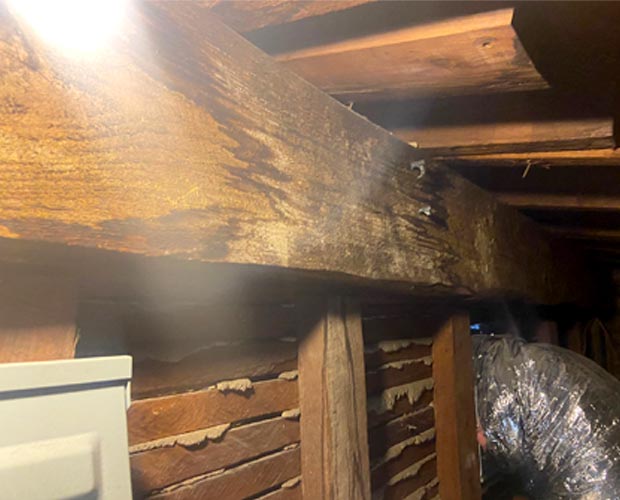
- Dark staining or fuzzy growth on floor joists or subfloor decking visible through the crawl-space access
- Musty odour rising from floor areas or floor registers
- Soft spots or springiness in floors above the crawl space
- Increased allergy or respiratory symptoms for ground-floor occupants
- Evidence of standing water, saturated soil, or moisture-damaged insulation in the crawl space
- Rust on metal fasteners, HVAC components, or pipes in the crawl space