
Saltar al contenido
Remediación de moho licenciada — llame para agendar
EN
MoldAct logo MoldAct Remediación de Moho Certificada IICRC S520
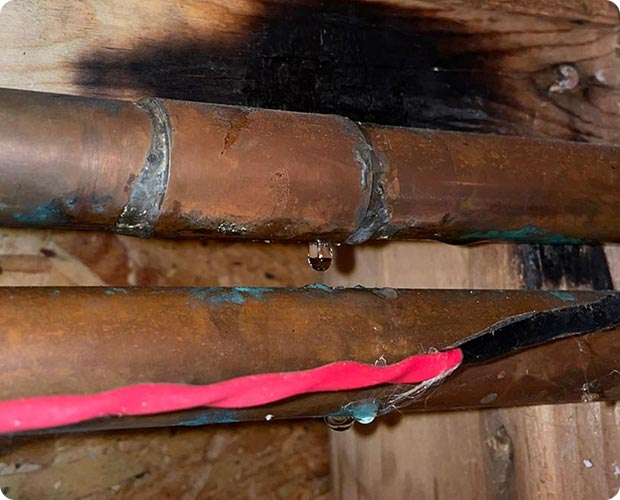
Common moisture and mold conditions found in an unencapsulated crawl space

Encapsulación de Espacio de Rastreo en Reston

La encapsulación del espacio de rastreo instala una barrera de vapor de polietileno grueso para sellar el suelo y las paredes, controlar la humedad, y prevenir el crecimiento futuro de moho — una solución permanente para espacios de rastreo húmedos.

Obtenga su Inspección de Moho Gratis

O llame ahora: (877) 660-0430

Encapsulación en Reston: lo que debe saber

Si está en Reston, está en una de las primeras comunidades planificadas del país — fundada en 1964 alrededor de grupos de casas adosadas, condominios y casas unifamiliares dentro de bosques maduros y lagos artificiales. Ese denso dosel de árboles también significa terreno sombreado y de secado lento alrededor de los cimientos.

Muchos de los grupos originales de casas adosadas de Reston de los años 1960-1970 tienen paredes medianeras compartidas y sistemas de drenaje de áreas comunes diseñados para una carga de agua pluvial mucho menor que la que soporta Reston hoy.

Condiciones de moho en Reston

Tipos de moho comunes en esta zona: Cladosporium (shaded, slow-to-dry foundations under mature tree canopy); Stachybotrys chartarum (aging common-area drainage in original 1960s–1970s townhome clusters); Penicillium/Aspergillus (below-grade parking and mechanical levels near the lakes); Chaetomium (long-standing moisture in older townhome party walls).

Señales de que necesita encapsulación

  • Mold has been remediated in the crawl space and a permanent moisture solution is needed
  • Humidity in the crawl space consistently above 60% RH
  • Standing water or saturated soil after rain events
  • Visible condensation on crawl-space framing in summer
  • Musty odour rising from the floor above the crawl space
  • Previous crawl-space mold that has recurred after treatment
Simple, transparent process

Nuestro Proceso de Encapsulación de Espacio de Rastreo en Reston

  1. 1

    Pre-encapsulation assessment

    The crawl space is assessed for standing water, drainage issues, existing mold, and structural concerns. Any mold remediation must be completed and cleared before encapsulation. Active water infiltration must be addressed with drainage or waterproofing before the barrier is installed.

  2. 2

    Surface preparation

    Existing debris, old vapour barriers, and damaged insulation are removed. The soil surface is graded to promote drainage toward the sump crock if present. Foundation walls are cleaned and checked for cracks.

  3. 3

    Vapour barrier installation

    A 20-mil reinforced polyethylene barrier is cut to fit the crawl-space floor and overlapped at all seams by at least 12 inches, with seams sealed with butyl tape. The barrier is extended 6–12 inches up the foundation walls and secured with mechanical fasteners and sealant.

  4. 4

    Foundation wall coverage

    The vapour barrier is attached to the foundation wall to the rim joist level and sealed at all penetrations (pipes, wiring, columns). This prevents warm exterior air and ground moisture from entering at the perimeter.

  5. 5

    Dehumidifier installation

    A commercial-grade dehumidifier with automatic drainage is installed in the encapsulated crawl space to maintain RH below 55%. The dehumidifier is sized for the volume of the crawl space and the local climate moisture load.

Encapsulación de Espacio de Rastreo en Reston — Preguntas Frecuentes

¿Proporcionan encapsulación en Reston?

Sí — MoldAct proporciona encapsulación en Reston (códigos postales: 20190, 20191, 20194). Llámenos para programar la cita disponible más cercana.

How long does crawl space encapsulation last?

A properly installed 20-mil reinforced vapour barrier lasts 20–25 years with minimal maintenance. Dehumidifiers typically require filter cleaning every 1–3 months and compressor service every 5–7 years.

Does encapsulation replace my sump pump?

No — if the crawl space has groundwater intrusion, a sump system is required to manage active water before encapsulation. Encapsulation controls vapour moisture; it does not manage liquid water infiltration.

What is the difference between a vapour barrier and encapsulation?

A vapour barrier is a thin poly sheet (typically 6-mil) placed on the crawl-space floor. Encapsulation is a full system: heavier barrier (20-mil), wall coverage to rim joist, sealed seams, and mechanical dehumidification — a sealed, conditioned environment rather than a barrier alone.

Encapsulación de Espacio de Rastreo en Reston — reserve hoy

Contratistas de remediación de moho certificados IICRC. Llame para agendar.

Llamar Cotización