
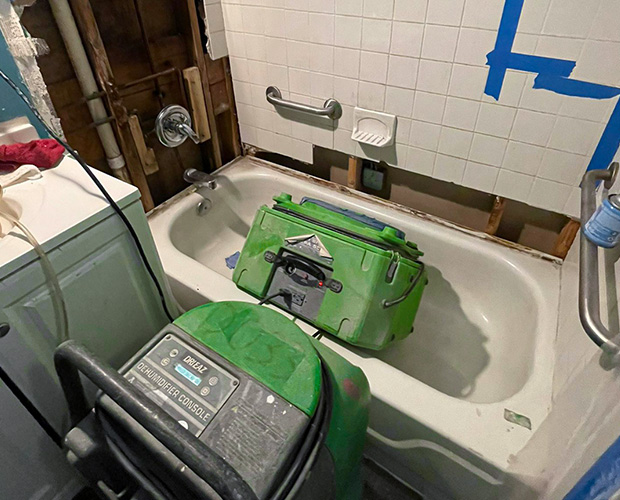
Moho en baño en Dupont Circle: lo que debe saber
Si está en una de las grandes casas adosadas o mansiones convertidas de Dupont Circle — muchas construidas entre 1870 y 1900 — su unidad puede tener plomería instalada décadas después del edificio mismo, dentro de paredes de mampostería antigua que nunca se diseñaron para la ventilación que necesita un baño o cocina moderno.
Muchos edificios de Dupont tienen un 'English basement' elevado bajo el nivel de la calle — estructuralmente la parte más húmeda y menos ventilada del edificio, y generalmente el primer lugar donde aparece un olor a humedad.
Condiciones de moho en Dupont Circle
Tipos de moho comunes en esta zona: Penicillium/Aspergillus (retrofitted bathrooms and kitchens without adequate ventilation); Cladosporium (window trim and masonry, elevated in summer humidity); Stachybotrys chartarum (chronic English-basement dampness in pre-1900s masonry); Chaetomium (long-standing leaks in converted multi-unit buildings).
Señales de que necesita moho en baño
- Black or greenish mould visible on grout lines, caulk, or tile surfaces
- Soft or spongy drywall at the base of the shower or bath surround
- Bubbling, cracked, or loose tiles — often indicating moisture migration behind
- Persistent musty odour in the bathroom after surface cleaning
- Staining on the ceiling below a bathroom (mold in subfloor or hidden leak)
- Visible mold at the base of toilet, vanity, or around plumbing penetrations